Meta tags serve as core on-page SEO components that communicate page content to search crawlers and browsing users. Well-structured title and description tags directly shape organic click-through rates across major search platforms.
Many site owners write meta content manually without standardized rules. Random wording, oversized character counts and missing key phrases create messy tags that hurt crawl efficiency and ranking performance.
Beginners often struggle to stick to search engine character limits. Too-short tags waste ranking space while overlong text gets truncated on result pages, cutting down potential visitor clicks.
Learning how to use meta tag generator for SEO optimization fixes these recurring errors. Reliable automated tools build rule-compliant meta tags without tedious manual calculation and repeated revisions.
This detailed tutorial covers downsides of manual meta tag drafting, core perks from learning how to use meta tag generator for SEO optimization, essential tool functions, real-world usage scenarios and step-by-step setup workflow.
Why Manual Meta Tag Writing Limits Your SEO Results
Writing meta content from scratch looks simple on the surface, yet most untrained users make consistent SEO mistakes during the creation process.
Uncontrolled character length overflow
Search engines set fixed display limits for titles and meta descriptions. Manual drafting frequently exceeds these thresholds, leading to incomplete cut-off text on search listings.
Improper core keyword placement
Inexperienced creators either stuff keywords unnaturally or leave target phrases entirely out of meta fields, weakening topical relevance for search algorithms.
Inconsistent formatting standards
Different pages end up with uneven tone and structure. Disorganized meta layout confuses crawlers and damages overall site-wide SEO consistency.
Excessive time consumption for bulk edits
Sites with dozens of posts require massive repetitive writing work. Manual tag creation drags down regular content update and publishing schedules.
Omission of minor valuable meta variants
Open graph and social sharing tags get overlooked regularly. Missing these elements hurts link preview appearance across social media platforms.
Key Advantages When You Learn How to Use Meta Tag Generator for SEO Optimization
Mastering how to use meta tag generator for SEO optimization helps all levels of web creators skip typical manual pitfalls and streamline on-page SEO routines.
Automatic character limit monitoring
Quality built-in counters alert users about overlength content instantly. Every generated tag stays within search engine approved display ranges automatically.
Optimized natural keyword arrangement
Tool frameworks guide proper keyword positioning without spammy stuffing. Final meta copy balances user readability and search algorithm preferences.
All-in-one meta format output
Aside from basic title and description, most solid generators produce OG tags and social markup in one go, covering regular SEO and social sharing demands together.
Sharp reduction in content production time
Users finish full sets of meta markup within seconds instead of spending multiple minutes on each single page entry.
Unified site-wide meta styling
Following identical tool-generated rules keeps tag structure uniform across all site pages, strengthening domain topical consistency for search indexing.
No advanced coding knowledge required
Finished meta code comes ready formatted for direct CMS insertion. New site builders paste generated code without understanding HTML markup basics.
Must-Have Features of a Practical Meta Tag Generator
Before diving deep into how to use meta tag generator for SEO optimization, learn about core features that define high-quality generating tools.
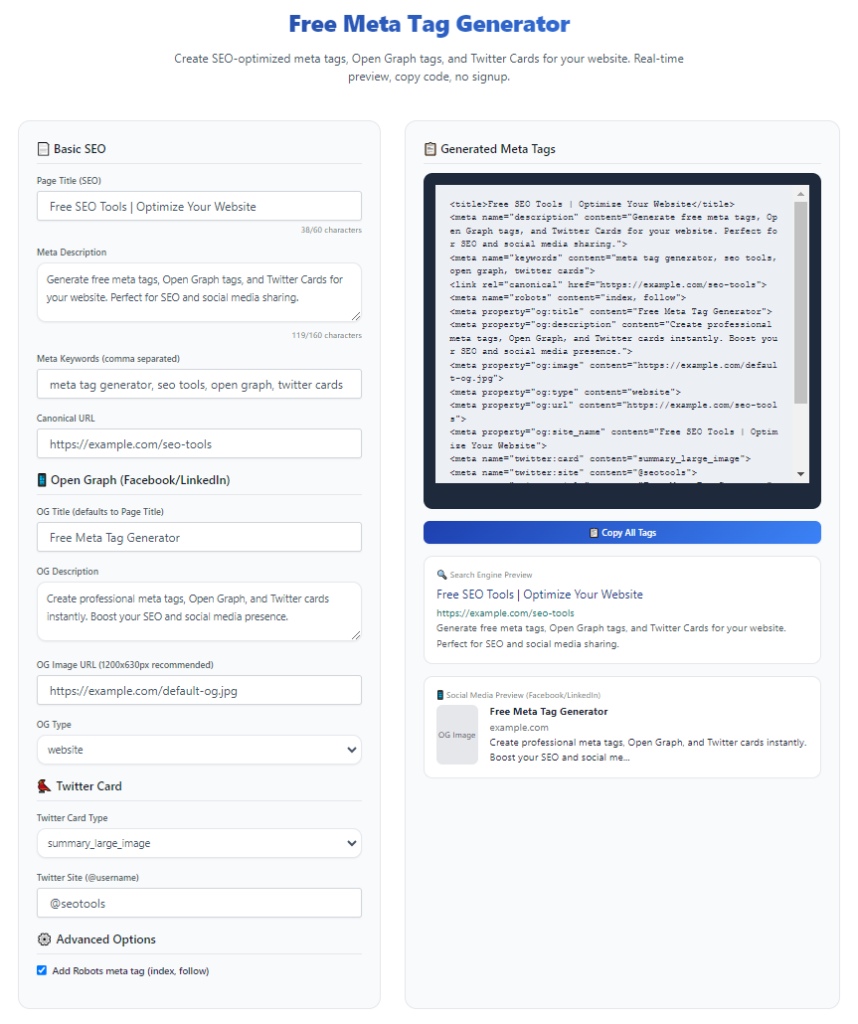
Real-time character count tracker
Dynamic counters update as users input text, marking excess characters in clear prompts to avoid search result truncation.
Separate input slots for core page details
Dedicated fields for page title, target keywords, page summary and brand name organize inputs and avoid messy blended content entries.
Built-in social meta tag generation
The tool auto creates open graph and Twitter card markup, ensuring clean previews once page links get shared across social feeds.
Instant formatted HTML code output
All finished meta content converts into usable HTML snippets, ready to copy and paste directly into website header sections or CMS meta boxes.
Quick bulk meta creation support
Advanced tools accept multiple page data inputs at once, perfect for large-scale site overhaul and full-site SEO refresh tasks.
Preview simulation of search listing display
Live previews replicate how finished meta content appears on search results, letting users tweak wording before final code export.
Common Practical Use Cases for Meta Tag Generators
Once you master how to use meta tag generator for SEO optimization, you can apply this tool across nearly every mainstream website development and optimization scenario.
Regular blog post on-page SEO setup
Blog owners generate unique meta pairs for every newly published article, improving organic click potential for long-tail search queries.
E-commerce product page optimization
Online store operators build product-focused meta tags highlighting core features and pricing perks to draw targeted shopping traffic from organic searches.
Static core website page refinement
About, contact and service pages receive polished, brand-aligned meta markup to strengthen main site core keyword rankings.
Content migration and site redesign projects
During site structure overhauls, standardized generated meta tags avoid inconsistent formatting issues after domain or platform switching.
Freelance SEO service client projects
Independent SEO specialists speed up bulk client page optimization, cutting manual writing hours and boosting overall project delivery efficiency.
Landing page conversion focused tagging
Marketing landing pages use benefit-driven meta descriptions crafted via generators to lift organic click rates and incoming visitor numbers.
Step-by-Step Tutorial: How to Use Meta Tag Generator for SEO Optimization
Follow this straightforward step workflow to produce fully SEO compliant meta tags suitable for all standard website platforms.
Step 1: Collect Your Core Page Information First
Gather page headline, primary target keyword, brief page summary and official brand name before opening your selected meta tag generator.
Filter redundant descriptive phrases to keep later meta writing focused around core page value propositions.
Step 2: Launch Your Preferred Meta Tag Generator Tool
Open your chosen online generator inside your regular browser to begin practicing how to use meta tag generator for SEO optimization.
Check that the tool includes live character counters and search preview functions for reliable SEO-focused creation.
Step 3: Fill In Corresponding Input Fields
Input your refined page title inside the dedicated title field, then add primary keyword and concise page summary into the meta description box separately.
Add brand details and preview image links if the platform requires social open graph tag setup for social sharing.
Step 4: Adjust Content Based On Live Character Feedback
Watch real-time length indicators as you edit wording. Shorten lengthy sentences or expand sparse text to hit ideal character ranges suggested by search standards.
Refer to the search result preview panel to check visible display status of your edited title and description copy.
Step 5: Generate Full Set of Meta HTML Code
Trigger the generate button to let the tool compile all entries into structured HTML meta markup including regular and social variant tags.
Scan generated code briefly to confirm no missing tags or garbled formatting appears in the final output snippet.
Step 6: Paste Generated Tags Into Your Website CMS
Copy finished HTML code and navigate to your site’s page editing backend. Insert markup inside designated meta setting boxes or site header coding areas.
Save page settings and refresh live pages to make new optimized meta tags go live instantly on your website.
Common Meta Tag Optimization Mistakes To Avoid
Even with helpful generating tools, careless setup choices can reduce SEO gains from your newly built meta markup.
Rely fully on fully auto-filled unedited tags
Generic auto-filled text lacks page uniqueness. Always tweak outputs after you learn how to use meta tag generator for SEO optimization to fit specific page content.
Ignoring live character count prompts
Overlooking length alerts still leads to truncated search listings that lower organic click-through rates over time.
Stuff excessive keywords into limited meta space
Unnatural keyword stacking triggers search spam filters and hurts page ranking stability instead of lifting search visibility.
Reusing identical meta across multiple separate pages
Duplicated title and description content creates duplicate meta signals, confusing crawlers and diluting individual page ranking power.
Leaving social meta fields empty after generation
Unfilled OG tags lead to broken link previews on social platforms and reduce referral traffic from shared content links.
Pro Expert Tips To Maximize SEO From Generated Meta Tags
Use these proven tactics to get better outcomes each time you learn and apply how to use meta tag generator for SEO optimization.
- Master how to use meta tag generator for SEO optimization to build consistent, rule-compliant meta markup for every single site page.
- Place your primary target keyword toward the front of title tags to strengthen topical signals for search engine crawlers.
- Keep meta descriptions benefit-focused to encourage higher organic clicks from users browsing search result listings.
- Check character preview repeatedly during editing to avoid unexpected text cutoff on live search pages.
- Customize each generated meta copy to match unique page content instead of copying identical phrasing site-wide.
- Take advantage of bulk generation features to speed up full-site meta refresh during regular SEO maintenance cycles.
Final Thoughts
Well-crafted meta tags remain an affordable and high-impact on-page SEO asset, yet manual drafting keeps many site owners away from consistent optimization.
Learning how to use meta tag generator for SEO optimization eliminates repetitive writing labor and most common formatting errors linked to handmade meta content.
Whether managing personal blogs, small business websites or large e-commerce stores, standardized generated meta improves crawl performance and organic click rates steadily.
By following the full steps and optimization advice inside this guide, you can maintain clean, search-friendly meta markup and build stable long-term organic search rankings for your entire site.
After learning the operation method, click the link below to enter the tool page for immediate use.